How to Tell if a North Carolina Court Call or Text Is a Scam
Got a suspicious court call, text or payment demand in NC? Learn the warning signs and use Court Delta’s free court scam checker to verify it.

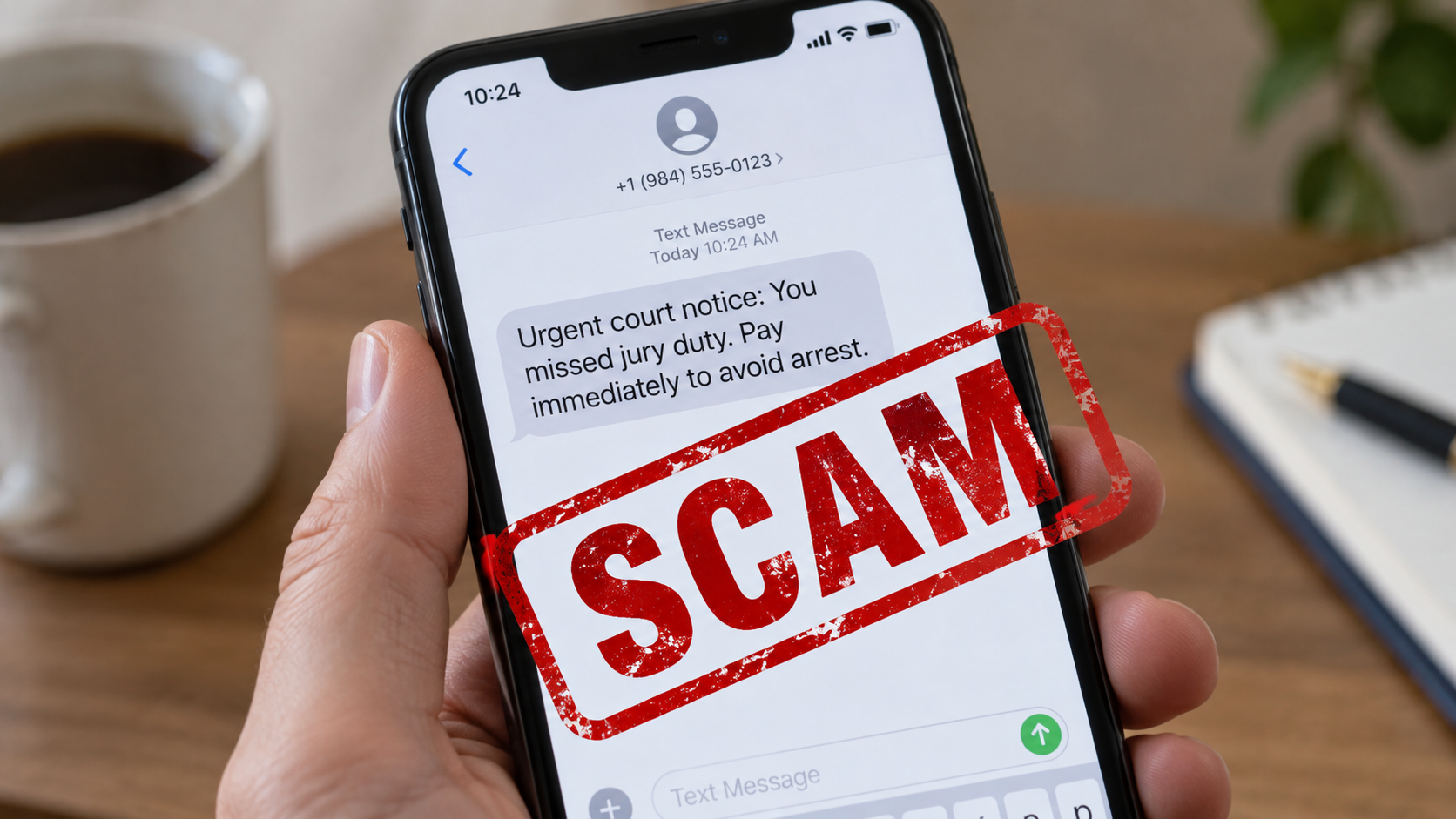
If you get a phone call or text saying you missed jury duty, owe court costs or need to pay immediately to avoid arrest, it can be hard to know whether the threat is real.
That is exactly what makes court scams effective.
Scammers often make the situation sound urgent. They may know your name, reference a real court, use the name of an actual judge or law enforcement officer, or even make the caller ID appear to come from a legitimate government number.
North Carolina court records are public, which means having accurate information about you does not necessarily mean the person contacting you is legitimate.
Court Delta has launched a free tool to help people check suspicious court-related calls, texts, emails and letters against known scam patterns and North Carolina court information.
Check a suspicious court message with Court Delta
Common Signs of a Court Scam in North Carolina
One of the most common versions of this scam involves jury duty.
A caller may claim that you failed to appear for jury service and that a warrant has been issued for your arrest. They then tell you that the problem can be resolved by paying a fine or bond immediately.
The North Carolina Judicial Branch specifically warns about this type of scam. Real jury summonses and failure-to-appear notices are sent by first-class mail, and you cannot be fined over the phone or by email for missing jury service.
The caller may still sound convincing. Scammers have been known to use the names of real judges and officers, spoof legitimate courthouse or law-enforcement phone numbers and reference personal information gathered from public sources.
The biggest warning sign is usually what happens next: they want money quickly.
Be Suspicious of Unusual Payment Requests
If someone claiming to represent a court, sheriff’s office or other government agency tells you to pay using a gift card, cryptocurrency or another unusual payment method, do not send money.
Court scammers may ask for payment through:
- Gift cards or prepaid debit cards
- Cryptocurrency
- Crypto ATMs or kiosks
- Wire transfers
- Cash App, Venmo or Zelle
- Money-transfer services
- Credit or debit card information provided directly over the phone
The North Carolina Judicial Branch advises people to hang up when they receive suspicious jury-duty calls and not provide personal or financial information. Official court payments have established channels, including the NC Courts online payment system, mail and in-person payment at the courthouse depending on the type of case.
Read the NC Judicial Branch guidance on jury service scams
A Real Name or Phone Number Does Not Prove the Call Is Legitimate
This is one of the harder parts of spotting modern scams.
You may assume the call must be real because the person knows your name, county or case number. They may identify a real judge, sheriff’s deputy or clerk. Your phone may even display a number associated with a courthouse or law-enforcement agency.
None of those things are enough to verify the caller.
The North Carolina Judicial Branch has warned that scammers can use information from public sources and spoof legitimate phone numbers to make calls appear authentic. In March 2026, the Judicial Branch also warned Wake County residents about scam messages claiming recipients had overdue traffic or toll violations and needed to pay or face penalties.
View the NC Judicial Branch scam alert
If something feels wrong, do not rely on the phone number or contact information provided in the message itself.
How to Check Whether a Court Payment Demand Is Real
The safest approach is to verify the information independently.
If the caller gives you a case or citation number, you can look up the court record yourself. You can also contact the Clerk of Superior Court in the county involved using contact information you find independently rather than calling a number the person gave you.
Court Delta’s new scam checker is designed to make that first verification step easier.
The tool asks what the contact was about, how you were contacted, what payment method was requested and whether the caller used common pressure tactics. If you have additional details, such as a case number, county, phone number or amount demanded, you can include those as well.
Court Delta then compares what you report against known North Carolina court-scam patterns and, where possible, relevant court-record information.
Use the free North Carolina Court Scam Checker
What If They Say You Missed Jury Duty?
Do not assume you need to pay simply because someone says you failed to appear.
The North Carolina Judicial Branch states that the statutory penalty for failing to appear for jury duty is currently $50 for each missed appearance. More importantly, official jury summonses and failure-to-appear notices are delivered by first-class mail.
A surprise phone call demanding hundreds or thousands of dollars to avoid immediate arrest should be treated as a major warning sign.
If you are concerned that you actually missed jury service, contact the Clerk of Superior Court in your county directly and verify your status.
What If They Threaten to Arrest You?
Threats are designed to keep you from slowing down and checking the story.
A scammer may tell you there is already a warrant for your arrest, that police are on the way or that hanging up the phone will make the situation worse. Some will tell victims to remain on the phone while purchasing gift cards or making a payment.
Do not let the urgency prevent you from independently verifying the claim.
The Judicial Branch’s guidance for suspicious jury-duty calls is straightforward: hang up, do not provide information and do not take action based on the caller’s instructions.
Read the official jury service scam guidance
Check Before You Pay
Court scams work because the threat feels serious and immediate.
Taking a few minutes to verify the information can make a major difference.
If you receive a suspicious court-related call, text, email or letter, do not send money or provide sensitive personal information simply because the person contacting you appears to know something about you.
Check the underlying court information, contact the clerk independently if necessary and pay attention to how the person is asking you to send money.
Court Delta’s scam checker is free, requires no login and can help you identify common warning signs before you take action.
Check whether a court call, text or letter may be a scam
Court Delta is a private tool built on publicly available North Carolina court records. Court Delta is not affiliated with, endorsed by or connected to the North Carolina Courts or the North Carolina Administrative Office of the Courts. The scam checker provides informational findings only and is not a legal determination or legal advice. If you need to confirm an official court matter, contact the appropriate Clerk of Superior Court directly.